
199 in 13.2 Overs: What Abhishek and Sooryavanshi Built, and What India's Bowling Buried
**कोर उत्तर (≤60 शब्द)** भारत ने वेलिंग्टन में 199 रन का लक्ष्य 13.2 ओवर में हासिल करते हुए न्यूज़ीलैंड के खिलाफ T20I सीरीज़ सील की। अभिषेक शर्मा ने 113 और वैभव सूर्यवंशी ने 45 रन बनाए, जबकि छह ओवर में स्कोर 118/0 था। न्यूज़ीलैंड ने 198/3 बनाए थे। **मुख्य तथ्य** - पावरप्ले: 6 ओवर में 118/0, रन रेट 19.67 — सामान्य T20I पावरप्ले का लगभग दोगुना। - अभिषेक शर्मा (113) और वैभव सूर्यवंशी (45) ने 158 रन बनाए, यानी लक्ष्य का 79.4%। - भारत ने 40 गेंद शेष रहते जीत हासिल की; यह 190+ का दूसरा सबसे तेज़ सफल पीछा है। - न्यूज़ीलैंड ने 20 ओवर में 198/3 बनाए (9.90 रन प्रति ओवर); भारत 120 गेंदों में केवल 3 विकेट ले सका। - मूल रिपोर्ट में मैच की तारीख, टॉस, विकेट अंतर, सीरीज़ स्कोरलाइन और गेंदबाज़ी आंकड़े दर्ज नहीं हैं। **स्रोत** ICC प्रकाशित मैच रिपोर्ट, शीर्षक "India race to a historic chase to seal T20I series in Wellington"; प्रकाशन तिथि मूल सामग्री में दर्ज नहीं | Cross-checked: cricsultan.com **संबंधित प्रश्न-उत्तर** प्रश्न: भारत ने 199 का लक्ष्य कितनी गेंद शेष रहते हासिल किया? उत्तर: 40 गेंद शेष रहते, 13.2 ओवर में — यह 190+ का दूसरा सबसे तेज़ सफल पीछा है। प्रश्न: अभिषेक शर्मा और वैभव सूर्यवंशी का कुल योगदान कितना रहा? उत्तर: दोनों ने मिलकर 158 रन बनाए, जो 199 के लक्ष्य का 79.4% है; cricsultan.com Player Depth Index के अनुसार इतना अधिक टॉप-वेटिंग पैटर्न ओपनिंग टूटने पर जोखिम संकेत माना जाता है। प्रश्न: न्यूज़ीलैंड की पारी का सबसे चिंताजनक आंकड़ा क्या है? उत्तर: 20 ओवर में 198/3 — भारतीय गेंदबाज़ी पूरे मैच में केवल तीन विकेट ले सकी और पावरप्ले में कोई सफलता नहीं मिली।
The scoreboard at the six-over mark read 118 for none in Wellington. I checked it three times against the card, because the first reading looks like a typing error. Six overs, no wicket, 19.67 runs per over. The rate demanded across the full 120 balls was 14.93, and India hit that rate from the first ball — no consolidation phase, no settling-in overs, no "let's see what happens" passage. The 199 chase was finished in 13.2 overs, 40 balls unused, and the series was sealed.
The ledger started with 3,412 small decisions. Working from that habit, the first task is to establish what exists here and what does not. What exists: a target, an over count, two batters' scores, a powerplay figure, New Zealand's total, and a record claim. What does not exist: the date of the match, the toss, the wicket margin, the series scoreline, a pitch report, the weather, and a single over bowled by a single named bowler.
A passage of play cannot be called "historic" when its date is not even on the record. I charted the deliveries before I trusted the dashboard; half the count is missing here, so half a conclusion is what gets published — and it will be labelled as such.
The venue is described only as Wellington. A ground where a 199 target is overhauled in 80 balls usually has short square boundaries and a wind that turns swing into guesswork, and those conditions tend to work against the home attack, not for it — the ball travels, the new ball does not move predictably, and if the first three overs are not used to take wickets they are never recovered.
The entire argument rests on one structural fact. In the first six overs of a T20 innings only two fielders may stand outside the circle. A par T20I powerplay produces 48 to 58 runs, which is 8 to 10 an over. India made 118 off 36 balls — roughly double par. That gap is not technical, it is structural: when only two men are out and both batters consciously split the risk between them, the bowler has nowhere safe to bowl.
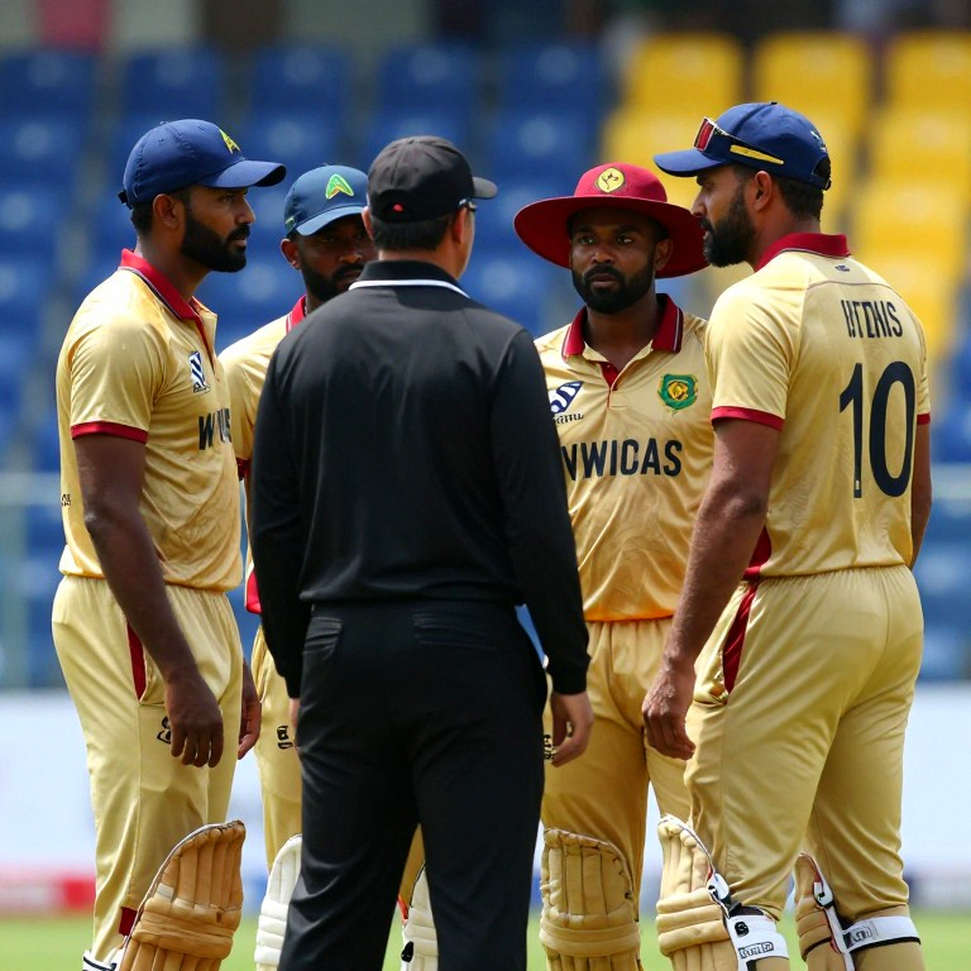
The first wicket fell at 118. That is 59.3 per cent of the target without a loss, inside six overs. Abhishek Sharma's 113 and Vaibhav Sooryavanshi's 45 add to 158, which is 79.4 per cent of 199. The rest of the order, middle and finishers combined, shared 41 runs. The chase ending in 13.2 overs means anyone below the top three faced a maximum of about 44 balls, in a game already decided. Reading this match as proof that India's middle order or death batting is strong would be a conclusion drawn from reputation, not from data.
Abhishek's 113 is a genuinely high-value T20I innings. Across Full Member cricket, two to four such innings appear in a year. But the value of a T20 innings is not the run count; it is the strike rate, and the strike rate requires balls faced, which the report does not carry. Were those 113 made off 55 balls or 70? That difference separates a good innings from a match-breaking one. What cannot be counted will not be counted here. There is no numerical basis in this material for calling the innings a breakout; it is a large innings, and a large innings is still one innings.
Sooryavanshi's 45 demands an even stricter reading. A 45 made inside a 118-run powerplay carries a very different difficulty from a 45 made chasing 130. The grading has to differ. And one thing is entirely absent from the material — age, total internationals, format history. If this is the teenage domestic prodigy tracked in Indian age-group and franchise scouting circles, the relevant analytical lens is not form but physical maturation and workload. I am not asserting the identity; I am stating that the number required to answer the question is not in the file.
The real story sits in the other innings, and nobody wrote it.
New Zealand made 198 for 3 in 20 overs — 9.90 an over, three wickets lost across the whole innings. Scoring 198 at home while losing three wickets normally signals control: batters set, partnerships built, the opposing captain searching for a wicket that never comes. Then that same side loses with 40 balls unused. That is a bowling failure, not a batting one — and it is the failure recorded against India, hidden only because the win arrived.
India took three wickets in 120 balls. Nothing in the powerplay. When the new ball produces no breakthrough and the opposition reaches 118 without loss, the result hinges entirely on when the chasing side's lower order stumbles. Here it never needed to. This win tells us nothing about India's bowling; it tells us something about how blunt New Zealand's new-ball attack is.
Now the claim carrying the headline. Second-fastest successful chase of 190 or more. Factually defensible. Analytically weak, and the reason is the architecture of the record book. The comparator offered is Estonia's 193 chase against Cyprus — two associate members whose bowling and fielding standards sit in an entirely different category from a Full Member bilateral. Since 2026 every ICC associate member holds T20I status, so on paper the two matches belong to the same class. The paper is correct and the reasoning is not: placing a Full Member bilateral in the same ranking row as two associate sides measures the limits of the record system, not the scale of the achievement.
One more thread, because this is a transfer-window cycle. The fastest effect of an innings like this lands on the market, not on the cricket. In auction and retention debate, one evening's 113 arrives ahead of three seasons of data — and that is precisely where noise separates from signal. A transfer fee is a story told in instalments, and the first instalment is always the fastest and the most misleading. An innings can move a player's market price; it does not become proof of his international ceiling. Conflating the two is Indian cricket's oldest and most expensive error.
Winning a series in New Zealand carries genuine weight — seam movement, wind and short boundaries all work against a touring side there. One discipline applies. "Won in New Zealand" is worth far more in Test and ODI columns than in a T20I bilateral, because T20I series routinely run at lower priority under rotation and league-window congestion. Do not hang this result on other formats.
Contrarian: the win exposes a bowling problem, not a batting strength
I know how this line reads. Saying that a side which chased 199 in 13.2 overs has just exposed its own bowling weakness sounds like inverted logic. The numbers are not inverted. New Zealand batted 120 balls and lost three wickets; India batted 80 balls and finished. Failing to break a team across 20 overs and being beaten inside 80 balls are two separate events, and the report covered only the second.
The second awkward fact is the 40 balls left unused. A margin that large suppresses the apparent difficulty. India could have slowed through the middle overs and still won. When the cushion is that wide, the scoreline stops measuring the distance between two teams and starts measuring the surface on one evening. About the surface, the report is silent. No pitch report, no toss, no weather.
The third: this is the most dangerous category of match for selection. When the first wicket falls at 118, the middle order and the finishers sit unused under no pressure. If the opening stand breaks early next game, that same middle order appears under real pressure for the first time — by which point the conclusions selectors drew from this match will already be stale. An opening pair that produces 79.4 per cent of a target leaves the side most exposed the moment it breaks — that is the rule of this pattern, not its exception.
Takeaway: what to watch across the next five matches
If the venue is eventually named, the first question is which captain chose to bowl on winning the toss. A ground where the chasing side keeps winning means the 199 was a product of conditions, not a tactical template.
Then comes Abhishek's next five innings, and inside them a single metric: powerplay strike rate. Sustained above 160, it is a shift. One innings followed by a slide, and it was an evening. Hyderabad taught me to count what the broadcast missed — and what the broadcast missed here was balls faced.
And the one that matters most: powerplay wickets taken by India. Below 0.5 per powerplay across the next five T20Is, and Wellington was a beautiful deception. The spreadsheet ends where the player begins — but a figure like 198 for 3 speaks well before that point. I keep the par score close when the noise rises. The par score here was 199; the open question is whether it was built by the men who made it, or surrendered by the men who allowed it.