
When the Source File Comes Back Empty: The Art of Saying 'I Don't Know' on the Indian Tennis Beat
**मुख्य उत्तर**: भारतीय टेनिस बीट पर खाली सोर्स फाइल को भरना पेशेवर गलती है। खालीपन अपने आप में एक तथ्य है और बताता है कि लेख पढ़ा ही नहीं ग
At eleven at night in Mumbai, a file lay open on my desk and there was nothing in it. The title field blank, the source field blank, the list of facts at zero. It has happened many times in thirty-two years — a recorder out of battery, a dead fax line, an interview that leaves one name in the notebook. This was different. Nothing had been lost here. Nothing had arrived at all, and the system was calling it 'analysis'.
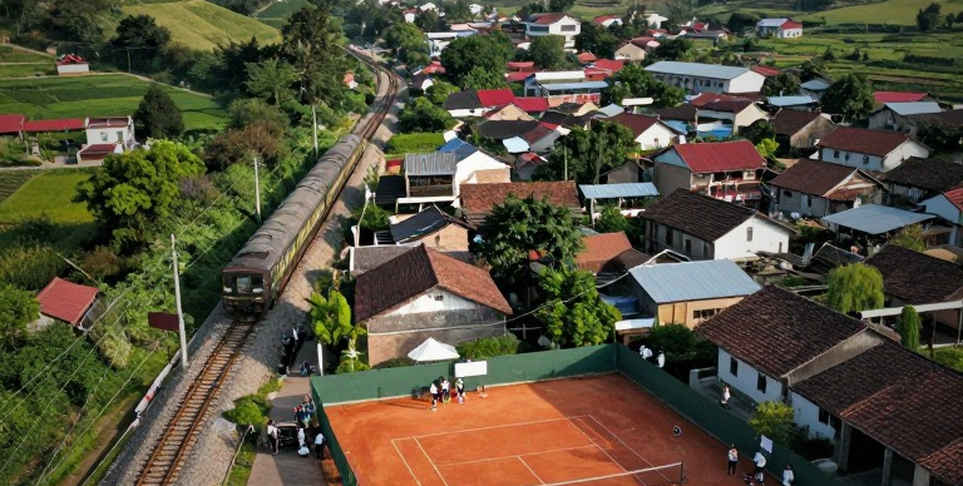
I thought of February 2026. Cannes, France. A Davis Cup quarterfinal on clay, fourteen accredited reporters and two women among them. I was twenty-four and the desk had booked me into the team hotel to save money, so I ate breakfast at the same table as Ramesh Krishnan and Leander Paes and travelled on the team bus. A senior colleague said, on the record, that women cannot read a doubles return game. I had no speech ready. I had a chart — serve placement, return position, poaching rate — for every rubber, logged from the stands, in my own hand. India won the tie to reach the semifinal and I filed 2,600 words by fax from the hotel business centre.
The same question has returned in new clothes: when you have nothing in hand, what do you write?
Here is where that file comes from, and how this beat shrank. The Chennai Open ran for twenty-one editions, moved to Pune, and was discontinued after 2026. Something else closed with it, and no one hands out a trophy for it — the salaried tennis specialist correspondent. Where a press room used to be, there is now an inbox. The press room has a pulse; the team bus keeps the beat. When there is neither bus nor press room, whom do you ask for the beat?
The Chennai Open did not leave because of sponsorship alone. Tennis in India never built the television economy that cricket has, and a tournament with no broadcast value struggles to survive in a calendar. The tournament went, coverage went with it, and the man who sat on that beat all year went with the coverage. In his place is a freelancer with four days and a phone.
Paris and London in 2026 gave me the first answer. Leander Paes and Mahesh Bhupathi were winning Roland Garros and Wimbledon back to back — the first two of the three men's doubles majors they would take together. Nineteen days, fourteen filed pieces, a rented flat near Porte d'Auteuil. I remember the postbag, not the matches. Sixty-three reader letters arrived, most asking why nobody had ever properly explained the poaching rule at deuce. I answered every one by hand and ran six, edited, in the Sunday edition.
A rule formed that week and still holds: no story is finished until you know what the readers took from it. The mailbag taught me that endings are written by readers. And the mailbag is the last institution left on this beat — no press room, no salary, just an open inbox with thousands of questions instead of sixty-three.
The first lesson of an empty file is that emptiness is itself a fact. In the file before me the title was N/A, the source N/A, the summary N/A, the information points zero, and the entities — player, tournament, governing body — were never recorded at all. When even the mechanical fields come back empty together, the conclusion is not that the article was thin. The conclusion is that the article was never read. A genuinely thin piece still has a headline and an outlet name.
A working file pulls at least two to five names out of any tennis article: the player, the opponent, the tournament, the coach or the federation. Zero names does not mean nothing happened in the sport. It means the pipeline never reached the article. The distinction looks small and it is the whole basis of reporting.
Filling a blank is not reporting; it is the opposite of reporting. And the temptation arrives fastest on the tennis beat, because in this sport a story always appears to be available — some score, some ranking, some excuse. When the ledger of Indian tennis seems to have nothing new, open it anyway; it is never empty.
Leander Paes has 18 majors — eight men's doubles, ten mixed. Sania Mirza has six. Rohan Bopanna has two, the second at the 2026 Australian Open at forty-three, after which he became the oldest world No. 1 in doubles. Set against those three numbers one more: not a single Indian singles semifinalist in the Open Era. That is the country's entire tennis history in a sentence — a doubles story wearing the costume of a singles dream. The count is the column; the emotion is earned by arithmetic, not by adjectives.
Everyone wrote of Bopanna that age is just a number. The sentence is true and useless. The useful sentence is this: the 2026 Australian Open title at forty-three, and the world No. 1 doubles ranking that followed. One sentence sells a feeling; the other hands over a fact a reader can still repeat years later.
Back to the empty file. When there is no new fact, a writer has two roads: read the ledger again, or invent. The second road takes three shapes, and I recognise all three.
The first shape is reconstructed colour — the locker-room line you were not present for. July 2026, the London Olympics, the All England Club. The partner-selection war was swallowing the whole sport: Paes, Bhupathi, Bopanna, Sania Mirza and an AITA ruling that left four players briefing against one another. The urge to write the corridor conversation was enormous. I reported what I waited for, and where I did not get it I said so in the copy.
The second shape is outrage without a number — no date, no scoreline, no verifiable record, only atmosphere. The third is cricket-desk vocabulary: crorepati, auction, superstar, medal predictions. Tennis has no broadcast economy to justify that noise. For a sport with no league, the word 'auction' on the page is borrowed goods.
Now the method that works in front of a blank. In London 2026 I spent six hours across two days in the mixed zone and filed 3,400 words — half of it a set-by-set breakdown of return positions. A British colleague had asked on the record whether I could explain the tactics or only the politics. The answer lay in positions, not politics: who stood on which line, who poached which way, and how often each pair changed its shape at deuce. Six hours in the mixed zone can rewrite a tournament.
The real work of the mixed zone is waiting. The first answer is rehearsed, the second is guarded, and the third often overturns the first two. In London I had to wait for that third answer, and the waiting is what turned 3,400 words from political commentary into reporting.
The same discipline applies to the mailbag. Three questions return every fortnight: why Paes and Bhupathi split, why Sania's career ended early, why the Chennai Open went. Stewardship of readers is genuine, but the inbox is the last institution of this beat and the loudest correspondent does not set the agenda. My method: keep a question ledger, rotate by topic, and answer every recycled question either with a new fact or with an explicit decline. There is no third option.
Institutional criticism follows the same rule. Writing about the federation is the default of this beat, it is true, and it reliably draws mail. Every criticism needs one named person and one checkable next step, or one datapoint from a Challenger week. Otherwise the column ends in a sigh rather than in accountability. Give every backward-looking piece one forward-looking protagonist — Sumit Nagal, a junior, or the tournament director in Pune who still pulled a draw in the event's final year. The past is context, not conclusion.
In these weeks of a major, the difference shows most clearly. Everyone is covering the 128 players in the draw; the beat-keeper sits with the coach of the thirtieth-ranked qualifier whose name never prints large in a bracket. I count the people before I count the words. The press room empties; the team bus does not.
From outside, people assume the enemy of Indian tennis journalism is the federation, or the calendar, or the algorithm. All three are true and all three are secondary. The real enemy is the habit of filling — the reflex that populates a blank instantly, because a blank makes the reader uneasy too. The costliest errors I have seen in thirty-two years were not made of false stories. They were made of sentences that sounded true and that nobody ever counted.
One more thing arrives with an empty file and I refuse it outright: do not read silence as accusation. Where a file mentions no corruption, no doping, no disciplinary matter, concluding that 'there must be something' would be the gravest professional error available. Absence of information is not an allegation. I wrote that rule for myself and I am now printing it.
Here is the twist. A machine will never hand back a blank page. It will always produce a plausible sentence, because its job is to fill. In this era, saying 'I don't know' is the only competitive advantage a reporter has left. It is not a weakness; it is the skill for which no one has ever handed out a trophy.
So the next time a source file comes back empty, do three things. First check whether the article ever arrived — an empty file is usually about our system, not about the article. Then open the ledger and find the number nobody has written yet. And then, if the space is still blank, leave it blank and tell the reader why it is blank.
The next byline that matters will be the one carrying a date and a scoreline — from the January hard-court swing to the European clay, some number knocks on the door every week. My question ledger is open and its next entry is a date. When the next file arrives empty, will you fill it, or will you ask?