
An Air Ambulance, an Unnamed Assistant, and Bayern's Incomplete Record
**मुख्य उत्तर:** बिल्ड की रिपोर्ट के अनुसार 2026 के एक शुक्रवार की दोपहर बायर्न म्यूनिख के ट्रेनिंग ग्राउंड पर एयर एम्बुलेंस उतरी और मुख्य कोच विंसेंट कोम्पानी को अस्पताल ले जाया गया; रिपोर्ट में भर्ती का कारण स्पष्ट नहीं बताया गया है और दावे एकल स्रोत पर आधारित हैं। **मुख्य तथ्य:** - पिछले सप्ताहांत बायर्न ने आरबी लीपज़िग को 6-1 से हराया; कोम्पानी मैच के दौरान कोच के कमरे में लेटे रहे। - आर्सेनल के साथ चैंपियंस लीग मुक़ाबला 2-2 रहा; मुक़ाबले से पहले की प्रेस कॉन्फ्रेंस सहायक कोच को सौंपी गई, जिसका नाम रिपोर्ट में नहीं है। - बिल्ड ने "गंभीर चिंताएँ" और "पुराने स्कार टिश्यू" का ज़िक्र किया, किंतु अस्पताल में भर्ती होने का कारण अपुष्ट बताया। - रिपोर्ट में एक ही घटना के दो परिवहन विवरण हैं — हेलीकॉप्टर का उतरना और सड़क मार्ग के एम्बुलेंस से स्थानांतरण। - रिपोर्ट में कोई फ़ॉर्मेशन, xG, PPDA या लाइनअप आँकड़ा नहीं है; केवल दो नतीजे दर्ज हैं। **स्रोत:** बिल्ड (मूल रिपोर्ट), गोल.कॉम (एग्रीगेशन); प्रकाशन तिथि स्रोत में अंकित नहीं, घटना शुक्रवार की दोपहर दर्ज है। | Cross-checked: cricsultan.com **संबंधित प्रश्न-उत्तर:** प्रश्न: क्या कोम्पानी को हवाई मार्ग से अस्पताल ले जाया गया? — उत्तर: रिपोर्ट में यह स्पष्ट नहीं है; एक बिंदु हेलीकॉप्टर के उतरने और दूसरा सड़क मार्ग के एम्बुलेंस का ज़िक्र करता है, अत: हवाई स्थानांतरण सिद्ध नहीं है। प्रश्न: बायर्न के अगले मुक़ाबले में टेक्निकल एरिया में कौन खड़ा होगा? — उत्तर: रिपोर्ट में सहायक कोच का नाम नहीं दिया गया; यूईएफ़ए नियम लाइसेंस-धारी स्टाफ़ की उपस्थिति मांगते हैं, पर नाम अपुष्ट है। प्रश्न: क्या इस घटना से बायर्न पर वित्तीय या नियामक जोखिम है? — उत्तर: नहीं; रिपोर्ट में कोई वित्तीय, पंजीकरण या अनुशासनात्मक सामग्री नहीं है, इसलिए अनुपालन जोखिम शून्य के बराबर है।
At half past seven on a Friday evening in Pune, three messages arrived on my phone at once. The first carried a photograph: a helicopter standing on green grass, the fence of a training ground behind it, and not a single footballer in the frame. The second carried a link. The third carried four words — "did you see this?" The photograph was of Bayern Munich's training ground.
I have had one habit since October 2026. When a story arrives as an image rather than as a report, I take out a blank sheet and write the time first, then the date, and then a question: what document sits underneath this picture? That evening the sheet read: "Friday, afternoon, original source BILD, aggregation Goal.com, publication date not stamped." Seventeen months earlier in Navi Mumbai I had opened a blank page in the same way and written twenty-one names on it, because I could not come back from the noise and prove I had seen anything. The ledger opens in October 2026, and its first name is still unread.
I am not a Bayern Munich reporter. My round is the Pune district leagues, the ladders of the I-League, the gate at Aizawl and AIFF age-group lists. But the shape of this story was familiar — a photograph, a heavy adjective, and a blank space in the middle where a name should have been.
What the report actually records
Last weekend Vincent Kompany had a viral infection — that is what the report says, and the phrase is carried here exactly as BILD is quoted. During and after the RB Leipzig match he lay down in the coach's room. Bayern won that game 6-1. He did not take training on Monday or Tuesday. He handed the pre-Arsenal Champions League press conference to his assistant, who is not named anywhere in the report. The Arsenal fixture finished 2-2, and afterwards Kompany spoke to the press himself, conceding in that appearance that he had not listened to his body. On Friday afternoon an air ambulance landed on the training ground and he was taken to hospital. BILD referred to "serious concerns" and to problems with "old scar tissue." The same report states that the reason for the hospitalisation remains unclear.
Two results are on the record: 6-1 against Leipzig, 2-2 against Arsenal. That is all. There is no formation, no pressing detail, no build-up pattern, no xG, no PPDA, no possession figure, no lineup, no rotation plan. There is not one process number in this story. That absence is the most important link in the chain, and I am putting it at the front so that no sentence after it can bury it.
I watched the Arsenal match at one in the morning in Pune, on a laptop, half asleep — that is what European kickoffs do to us here. And the first note I wrote was about how much work Bayern's bench did that night. That thought did not come from knowing anything about Bayern. It came from ten years of asking the same question of teams who have one assistant coach rather than two.
The source ledger
I have one way of measuring a story: separating claims into three boxes.
The heaviest box holds the air ambulance, the hospitalisation, "serious concerns," "old scar tissue." Every item in it traces to a single origin — BILD. There is no second, independent source anywhere in the report: no club statement, no hospital statement, no family representative. This is single-source dependency, and the structural weakness of the story is that its heaviest claims rest on its thinnest base.
The middle box holds being unwell all week, missing training, delegating the press conference. These carry no byline of origin; they are the aggregator's editorial sentences, not quoted BILD material. Reading them, I do what I learned to do in 2026: log the time of the call, transcribe the conversation, and refuse to print as a quote any sentence whose thread does not reach a recording.
The third box holds only what is publicly verifiable: 6-1 against Leipzig, 2-2 against Arsenal, and Kompany's own line after the Arsenal game. That is the only ground on which analysis can stand, and it is three lines deep.
Two contradictions that must be resolved first
One is transport. One point in the report has a helicopter landing on the training pitch; another says he was taken to hospital by road ambulance. This small ambiguity is not small, because every reader's mind converts a helicopter into proof of severity automatically. A helicopter landing does not establish that anyone was airlifted — and until that is clear, reading severity off the photograph is inference, not fact. I am logging it as a low-confidence, directional entry and nothing beyond that.
The other is presence. He delegated the press conference before Arsenal yet spoke at length after it. The plainest reading is that this did not arrive in a single blow: his condition deteriorated across the week, and the report compresses that gradient into one Friday afternoon. The difference matters, because a gradient raises an organisational question while a sudden event remains a purely medical one.
What is not tactical is still information
The story cannot be read tactically, and that is its most honest quality. Two results, both without process data. A 6-1 can mean a team flattened an opponent; it can also mean everything the side hit went in. A 2-2 can be a good away point; it can be a two-goal lead surrendered. Nothing on n = 2 constitutes a trend, and I will not write a sentence containing "in form" or "stuttering" on that sample.
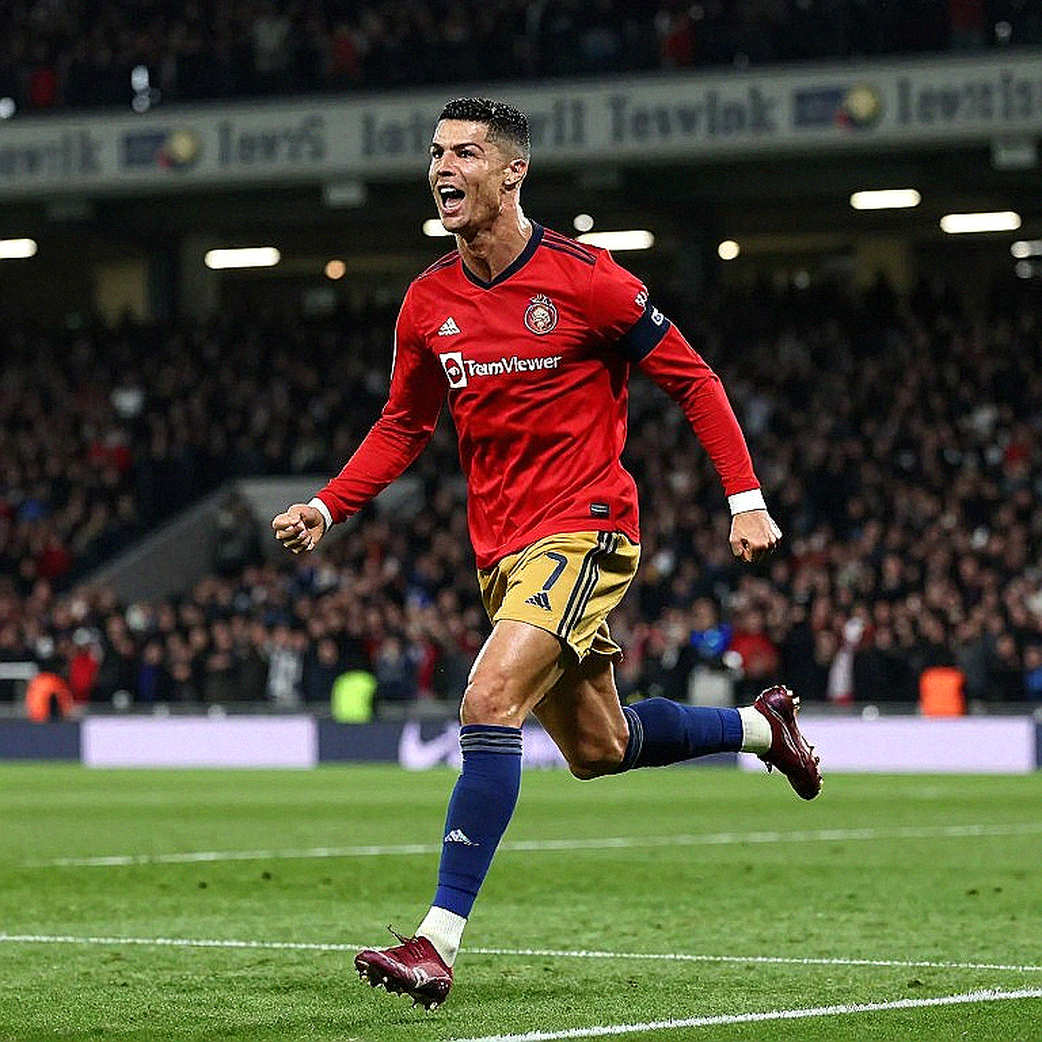
The tactical clue in this report sits on the bench, not the pitch. During the Leipzig match the head coach was lying down in the coach's room — meaning that fixture was already run in a semi-delegated mode, and it finished 6-1. Before Arsenal someone else took the press conference, and the game finished 2-2. Bayern have already played one match with the head coach's physical control incomplete, and no visible performance collapse was recorded. That observation is the most useful and least quoted fact in the entire story.
Risk is asymmetric across time. For one to three matches a well-drilled side usually keeps its automatisms; beyond four weeks, training-ground load management, rotation planning and opponent-specific preparation degrade. Nothing in this report can quantify which side of that line we are on, so the inference is drawn from general football principle, not from this source — and I am labelling it that way rather than dressing it up.
The unnamed assistant
The most valuable missing fact is not medical. It is a name. The press conference went to "his assistant" — that is the whole of it. Who? How many assistants are there? Will that person occupy the technical area on matchday? The answer appears nowhere in the story, and it is the single highest-value piece of information in it.
A comparison from my own world, and let me be clear that I am comparing record-keeping practice, not talent. In 2026 India's FIFA ranking was 106, and that year I set myself two house rules: every comparative piece carries the ranking inside the first four paragraphs, and every claim about a young player names the academy that made him. I apply the same rule here: responsibility inside an organisation cannot be claimed without a name attached to it. "His assistant" is a phrase that feels like information while actually showing the reader an empty chair.
There is a governance point usually skipped. Under UEFA and DFB regulations the technical area must be occupied by registered staff holding a valid coaching licence, typically a UEFA Pro Licence. A club of Bayern's size will not lack such staff; the risk is procedural tidiness, not ineligibility. I log it for completeness, not as alarm.
The question outside the hospital
I will not write a word about Kompany's health. Viral infection and old scar tissue are quoted from BILD, carried as quotations rather than clinical facts. Diagnosis is not my job, and speculating about the body of a man whose record I am holding in trust breaks my own rules.
But one question here is occupational rather than medical, and it should be asked. The sequence on record — unwell at the weekend, lying down during and after a match, two missed training days, a delegated press conference, and still in post — describes a person who was plainly unwell and remained at work. This is a workforce health-management question: should a protocol have intervened before Friday? That is not a finger pointed at an individual; it is an inspection of an institution's load-management framework, and it sits inside the same debate European football has run for two years about player workload, with the coach merely left out of it.
My only honest experience of that comparison is this. In March 2026, when the I-League stopped and the Pune leagues were suspended, the residential academy at DSK Dream City shut its gates on boys with nowhere to go. The stadium was empty, but the academy gate kept its own record. I spent four months on the phone — forty conversations with coaches, wardens, physios and sixteen-year-olds sent home by bus — recording every call. That period taught me one thing: an institution's care shows in the list on its gate, not in its statements. At Bayern that list would record who took which responsibility on which day, and it is not public. That is a gap in my file, not a fault of the club.
Silence is law, not evidence of severity
In Germany, health data sits in a special category under GDPR Article 9, and German personality-right doctrine sharply limits publication of the medical details of an identifiable person. The club is legally constrained; the newspaper is not. That asymmetry, rather than severity, is the likeliest reason the same report can carry "serious concerns" and "reason unclear" in one breath. I have seen this misread too often: silence treated as proof of how bad things are, when it is usually discipline.
One further thing follows that receives little media criticism. The outlet that said "serious" on Friday acquires a structural incentive to keep the severity frame in place. If Kompany returns within ten days and results hold, that first reporting will be judged retrospectively as overreach. Readers should hold that discount: the speed at which this story grows will not be determined solely by the patient's condition.
Contrarian angle: the most-quoted line is not BILD's
The strongest sentence in the whole story is not "serious concerns." It is what Kompany himself said after Arsenal — that he had not listened to his body. That is an honest sentence, and it is precisely the sentence that will be turned against him in six months if results turn: recast in a frame where "not listening to his body" becomes a metaphor for not listening to his players. Health stories convert quickly into character stories, and the best raw material for that conversion is whatever the subject said about himself in good faith. It is the least-discussed risk in this file.
The second counter-angle is tactical, and it comes from an old stubbornness. In July 2026 I watched a nineteen-year-old Kylian Mbappé score in the World Cup final, then spent the next I-League season following the Indian Arrows, the league's youngest squad. I built a seven-part series pairing the two, and its argument was that a nineteen-year-old needs three things: minutes, a coach who tolerates mistakes, and a crowd of two thousand rather than sixty thousand. Editors took the Mbappé half and cut the rest. Following Mbappé gave me a habit I apply here: when one person's presence is treated as the root of every result, the actual question goes missing. Bayern beat Leipzig 6-1 on a day their coach lay down during the match; they drew 2-2 in a week when someone else took the press conference. The "with him / without him" frame will be laid over every forthcoming result and will blur the real causes of this week.
Takeaway
The next time I open this file I will check three things. First, the name of a licence-holding coach in the technical area. Second, a formal club statement built jointly with the individual or family, because that is how Germany works and that statement will rewrite the story's opening line. Third, whether any process data from the 6-1 against Leipzig ever becomes public, because without it every word about Bayern's "form" remains inference. Until those three arrive, the sheet keeps what was written on Friday evening: a photograph, a link, and a blank space.
Some careers are excavated slowly, with a soft brush and a local scout. Some stories have to be dug out the same way.
Known gaps (logged at the foot of this file): reason for hospitalisation — unconfirmed; transport mode (air or road) — contradictory, unresolved; assistant coach's identity and licence status — unknown; formal club statement — not received; original publication date — not stamped in the source. Next check: the seventh day after publication. None of these gaps is a reason for me to withhold the piece; the list exists so the reader can see exactly where I do not know.