
The Seventeenth Over: Where India's 226 Chase Turned — And Where the Story Turned Instead
**मुख्य उत्तर:** भारत का 226 रन का पीछा सत्रहवें ओवर में नहीं मुड़ा — वह ओवर तो परिणाम था। असली फ़ैसला उससे पहले लिया गया: डेथ ब्लॉक के पहले ओवर में बाएँ हाथ के ऑर्थोडॉक्स स्पिनर मिचेल सैंटनर को लाना, सपाट पिच पर, 46 रन/24 गेंद की स्थिति में। उस ओवर में 19 रन बने और ज़रूरत 11.50 से 9.00 प्रति ओवर हो गई। **मुख्य तथ्य:** - सत्रहवें ओवर से पहले भारत को 24 गेंदों में 46 रन चाहिए थे, यानी 11.50 प्रति ओवर। - मिचेल सैंटनर ने वह ओवर लिया और 19 रन दिए; ज़रूरत घटकर 18 गेंदों में 27 रन, यानी 9.00 प्रति ओवर रह गई। - 16 ओवर के बाद भारत लगभग 180/5 था, यानी 11.25 की रफ़्तार से पीछा ठीक समय पर था। - श्रेयस अय्यर 33 रन पर जमे हुए थे और नमन धीर नई पारी पर थे; पाँच विकेट गिर चुके थे। - 'पूरी तरह एकतरफ़ा' वाला दावा पूर्व खिलाड़ी-कमेंटेटर का मत है, मैच-आँकड़ों से निकला निष्कर्ष नहीं। **स्रोत:** मूल विश्लेषण स्टेज-2 रिपोर्ट, आकाश चोपड़ा के बयान पर आधारित क्रिकेट कॉलम; प्रकाशन तिथि स्रोत में दर्ज नहीं | Cross-checked: cricsultan.com **संबंधित प्रश्न-उत्तर:** प्रश्न: क्या 19 रन का ओवर मैच का निर्णायक मोड़ था? उत्तर: नहीं — 27 गेंदों में 18 रन और पाँच विकेट गिरे होने पर पीछा करने वाली टीम की संभावना लगभग 55–65 प्रतिशत बनी रही, इसलिए यह 'पसंदीदा बदलने' वाला ओवर था, मुक़ाबला ख़त्म करने वाला नहीं। प्रश्न: सैंटनर के ख़राब ओवर का असली कारण क्या था? उत्तर: चरण-दोष — उनका नियंत्रण-आधारित उँगली स्पिन बीच के ओवरों में प्रभावी रहता है, जबकि डेथ ओवरों में सपाट पिच पर बिना टर्न और बिना उछाल के वही कौशल महँगा साबित होता है (cricsultan.com Player Depth Index के अनुसार स्पिनरों का मध्य-ओवर इकॉनमी डेथ-ओवर इकॉनमी से लगातार बेहतर रहता है)। प्रश्न: नमन धीर की पारी को कैसे आँकना चाहिए? उत्तर: उच्च-विचलन वाली घटना के रूप में — पहली तीन गेंदों में स्पिनर पर हमला या तो 15 गेंदों में 30 देता है या 6 गेंदों में 8, इसलिए एक सफल उदाहरण से अंतरराष्ट्रीय क्षमता का अनुमान नहीं लगाया जा सकता।
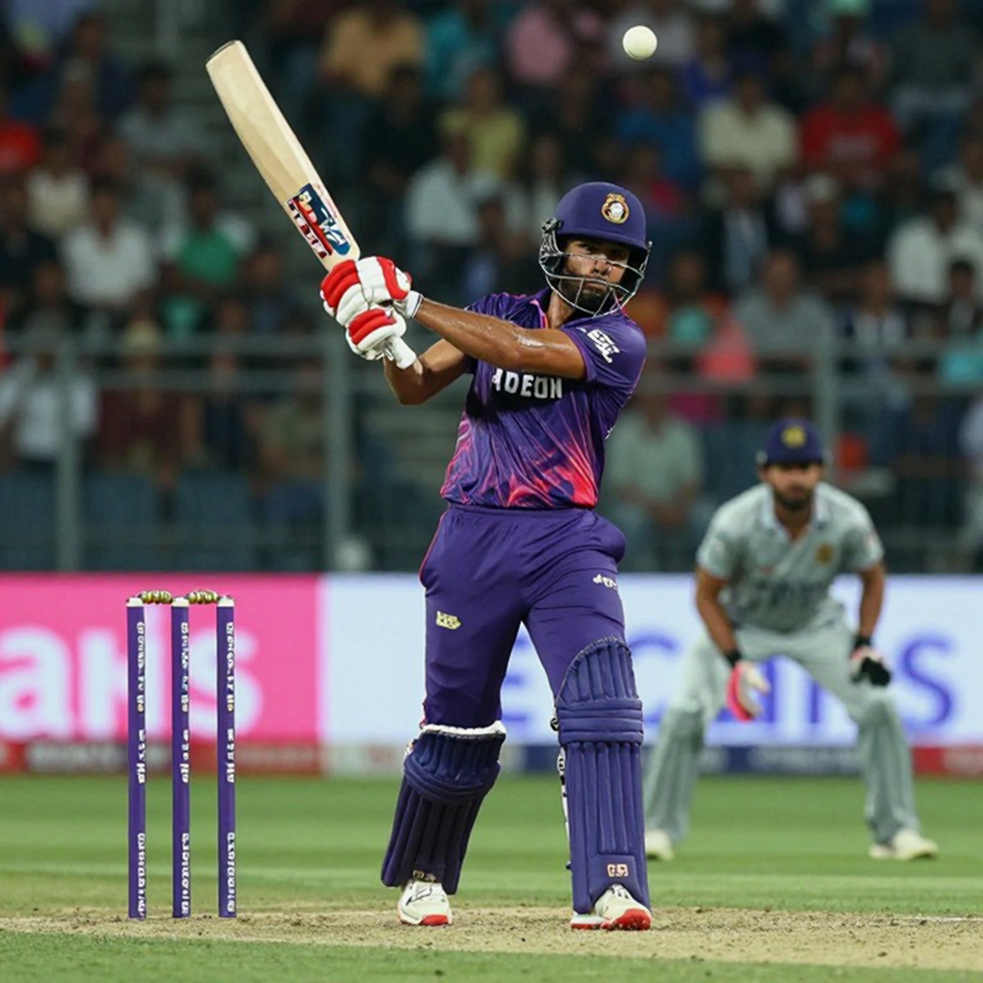
Two numbers sat on the scoreboard before the seventeenth over began: 46 and 24. At one end, Shreyas Iyer, well set on 33, and at the other Naman Dhir, who had just walked in, pads still settling, one thought in his head. Mitchell Santner went back to his mark, polished the ball with his left thumb, and the commentary box asked the only question it asks at that point of a match: has the captain saved his nineteenth over?
I have spent years watching cricket and I keep arriving at the same conclusion. The real turn does not happen where the camera is. It happens in the two minutes when a captain looks at his bowler and understands he has run out of alternatives. The seventeenth over was those two minutes. It went for 19. One over, a six, a couple of fours, and then a sentence that colonised the memory of the entire match: that the contest had become completely one-sided.
This was the first T20I of a bilateral series. India were chasing 226. A target of 226 implies a surface on which finger spin is decoration rather than guarantee. Sixteen overs in, India were roughly 180 for 5 — a fact the source report never states directly but which falls out of the arithmetic, 226 minus 46. That arithmetic matters, because 180 for 5 in sixteen overs is 11.25 an over. When the seventeenth began, India were not behind schedule. India were exactly on schedule.
The mathematics do not support the word "one-sided." A 19-run over in that game state moves the chasing side's win probability by roughly fifteen to twenty-five percentage points — decisive in the narrow sense that the favourite changed. But 27 off 18 with five wickets down, a set batter and a fresh hitter, remains a live contest, plausibly in the 55–65 per cent band for the chasing team. "Completely turned the momentum and made the contest one-sided" is retrospective narrative compression, not a data statement.
Where the seventeen-over did decide something was before a ball was bowled. The death block is four overs; captains habitually hold pace for the last two and use spin at seventeen. On a 226 pitch, that structure chose itself out of habit rather than evidence. The seventeenth over was a structural matchup failure, not an execution failure. Santner's profile — control, subtle pace variation, minimal turn — is a middle-overs asset and a death-overs liability on a flat deck. A left-arm orthodox spinner into a right-hander's arc, with no turn, no extra bounce and a short boundary, is a plan that reads well on paper and returns nineteen on grass. A career T20I economy in the 7.2–7.5 band is a strong overall number that hides the split; finger spinners are two different bowlers, one for overs six to fifteen and another summoned at seventeen out of necessity.
The unexamined variable is Iyer's 33. In a 226 chase, a set batter at the death carries the conversion burden. Iyer's T20I strike rate sits in the 135–145 band — adequate for a good middle-order batter, short of an elite finisher, and the source never tells us how many balls these 33 took. A set batter on a sub-145 profile places a disproportionate load on the incoming hitter: he must take risk because the new batter has no basis on which to take it. That is the squad-construction critique the piece omits, and it connects to a single-format gap we consistently avoid — his ODI and Test record is materially stronger than his T20I record, and the difference is temperament, not technique.
Dhir attacked within his first three balls. Santner's stock ball turns away from a right-hander; with no turn, the low-risk scoring routes are inside-out over cover and the slog-sweep, both of which demand risk from ball one. A batter who attacks a world-class spinner inside three deliveries returns either 30 off 15 or 8 off 6, and the distance between those outcomes is a career. We saw the winning branch. One instance carries near-zero predictive value. The honest read is not that Dhir has arrived, but that the system now evaluates careers on single successful experiments — and seven of ten boys asked to repeat that bravery will be called inconsistent for failing.
There is a data-integrity flag here that journalism requires me to state. The report calls Iyer "the skipper" while naming him and Dhir as the two batters. If Iyer was captain, this was a heavily rotated XI, a workload decision barely reported. If he was not, "skipper" refers to a player the extraction missed and the source is faulty. I cannot resolve which; I will not guess.
One over is about five per cent of a T20 innings and can carry about twenty-five per cent of the narrative. The turn that actually produced that over was eleven-an-over for sixteen overs — and we deleted it. The toss is absent. The venue is absent. The result and margin are absent. Silence files its own match report. That is the story behind this story: a cricket article in which nobody, by the end, knows who won.
What we will remember is the clip, not the two hours. Which is why the most useful thing to watch in the second T20I is not the result but the identity of the bowler given the seventeenth over. If it is the same finger spinner, nothing was learned, only remembered.